DR. DEPAEPE
1. WHAT
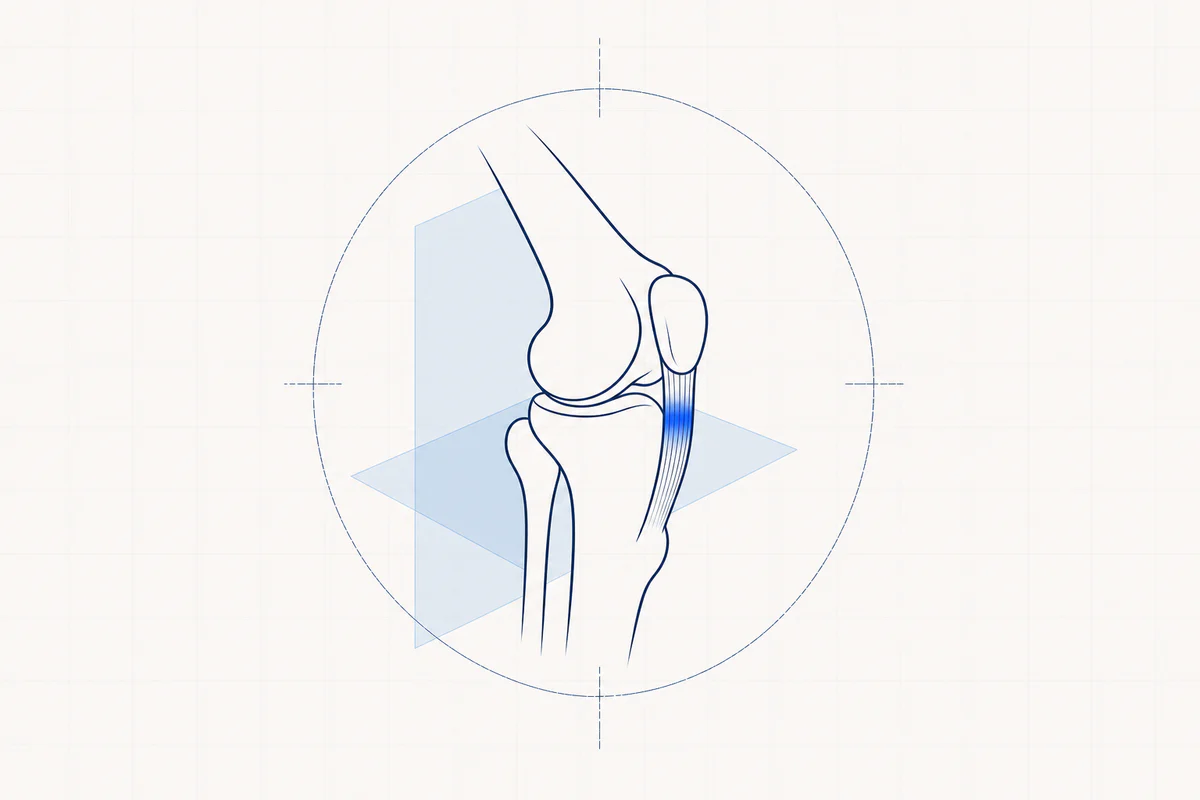
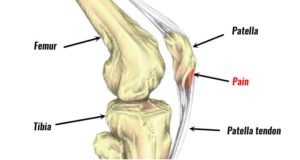
Jumper's knee or patellar tendon tendinopathy is an overuse and chronic inflammation of the patellar tendon between the kneecap and the shin bone (patellar tendon). This mainly occurs in people who participate in jumping sports (volleyball, basketball, etc.)
It often starts with an acute overload, causing micro tears in the tendon. The body does not have time to properly recover before the next training, causing micro cracks to occur again. Ultimately, this leads to reduced tendon quality (tendinopathy). This manifests itself in load-related pain on the underside of the kneecap, which can also persist at rest at a later stage.
2. CAUSE
- Overload: mainly caused by jumping sports (volleyball, basketball, etc.), but other sports such as running or football can also trigger the problem.
- Muscle shortening: Shortening of the thigh muscles (hamstrings) and thigh muscles (quadriceps) increases the risk of overloading the patellar tendon.
- Static deviations: such as flat feet or arched feet, leg length differences, bow-legged or bow-legged legs, can play a role in the development or maintenance of patellar tendon complaints.
- Bad and inappropriate shoes:
3. COMPLAINTS
- Pain at the bottom of the kneecap: In the first phase, the complaints often consist of pain during and after exercise, with complaint-free periods when no exercise is performed. With prolonged overload, the complaints can also occur at rest and the pain does not go away.
- Pain when climbing stairs:
- Pressure pain and thickening of the tendon just below the attachment of the tendon to the kneecap:
- Stiffness and/or starting pain around the patellar tendon:
4. EXAMINATION AND DIAGNOSIS
- Clinical research from the doctor.
- Ultrasound shows the degeneration (tendinopathy) and sometimes also the tears in the tendon tissue.
- MRI scan: can confirm the diagnosis with certainty.
5. TREATMENT
De behandeling is in de eerste plaats niet operatief. In eerste instantie moet de ontsteking bestreden worden.
5.1 Non-operative treatment
- Anti-inflammatory medication. Anti-inflammatory ointment.
- Measured sports load below the pain threshold. Temporary sports stop or replacement with less knee-taxing sports such as swimming, aqua jogging, etc.
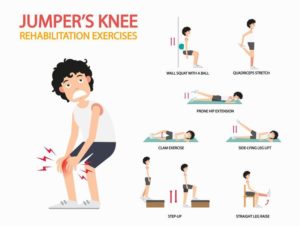
- Physiotherapy. Exercise therapy for the patellar tendon (eccentric exercises), stretching, correcting hamstrings and quadriceps, ...
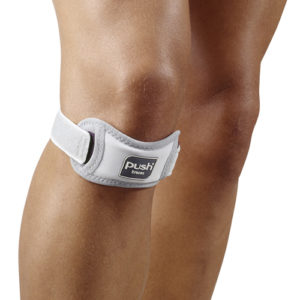
- Relieving patella strap or taping.
- ESWT: extra-corporeal shockwave, this is comparable to a kidney stone crusher and stimulates the recovery process in the patellar tendon.
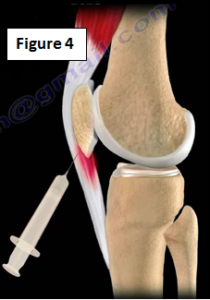
- Cortisone injection is contraindicated due to the increased risk of tendon rupture. PRP injections can be used safely.
5.2 Surgical treatment
If there is no response to treatment after a few months, surgical intervention may be considered.
The damaged and inflamed tendon tissue is removed through a small incision in the front of the knee and then carefully stitched back together. Sometimes a small part of the inflamed bone on the kneecap also needs to be removed.
6. ANESTHESIA AND HOSPITAL STAY
The procedure is performed as a day hospital and can be done via an epidural or short general anesthesia.
7. COMPLICATIONS
Complications can arise with any procedure, including the treatment of jumper's knee. The chance of a complication with this procedure is very small.
- Bleeding from the wound.
- The wounds sometimes remain sensitive for a long time or the skin around the wounds feels numb.
- Prolonged pain. Sometimes the patellar tendon remains sensitive for a long time. The pain finally disappears with long-term exercise therapy.
- Infection: very small chance because extensive rinsing is done during keyhole surgery.
- A blood clot or phlebitis may form in your operated leg. Injections are prescribed and we try to move as quickly as possible to reduce that chance to almost zero.
- Damage to structures around the knee, such as nerves or blood vessels, is very rare.
8. REHABILITATION
You must realize that it is a long and intensive rehabilitation process in which a lot of commitment and discipline is expected of you.
After the operation, a brace is applied to keep the leg straight for 2 weeks. Afterwards, the hinge of the brace is progressively loosened, so that you can fully bend again. We aim for complete flexion of the knee 6 weeks after the procedure.
During the first 3 to 4 weeks, it is best to use crutches to relieve the knee and protect the attachment to the tendon tissue.
The exercise therapy is prescribed and supervised by the physiotherapist.
9. FACTS
- Try the pain controlled with prescribed painkillers and ice applications.
- Love the wound clean and dry. Showering is permitted with a shower plaster (Opsite, Tegaderm, ..). The stitches can be removed after 14 days by the home nurse or your GP.
- Injections in the abdomen are recommended for the first 20 days (blood thinners to avoid phlebitis). You will receive a prescription for home care, the nurse at the day hospital can also teach you how to do it. If you are already taking blood thinners before, this may differ from the normal schedule.
- Disability is between 6 weeks and 4 months and depends on the content of the job. The way you travel to work is also important. Discuss this with your doctor before the procedure.
- Driving: You can start driving when the knee feels reliable, strong and stable. It is also important that the knee bends at least 90°. A normal gait and walking down stairs without using the handrail provide a good indication of muscle control around the knee. For most people this is approximately 6 weeks after the procedure.
- Sports resumption: Your physiotherapist and surgeon will advise you when it is safe to resume your hobbies. This will depend on the type of sport and the level at which you practice it. Cycling is the ideal activity to make the knee flexible again and to train the thigh muscles without overloading the knee. This can be started after 4 to 6 weeks if the pain and swelling have disappeared sufficiently. You can resume running training slowly after 4 months, but more intensive exercise can be built up from 6 months onwards.
Frequently asked questions
Orthopedisch chirurg – AZ Jan Palfijn Gent
Specialized in shoulder and knee surgery
The information on this page was prepared by Dr. Yves Depaepe and is intended as general medical information. Always consult your doctor for a personalized treatment plan.