DR. YVES DEPAEPE
FROZEN SHOULDER or FROZEN SHOULDER or ADHESIVE CAPSULITIS
1. WHAT
It is a disease of the shoulder that develops over a period of months. The shoulder gradually becomes more painful and stiff, making it more difficult to move the shoulder.
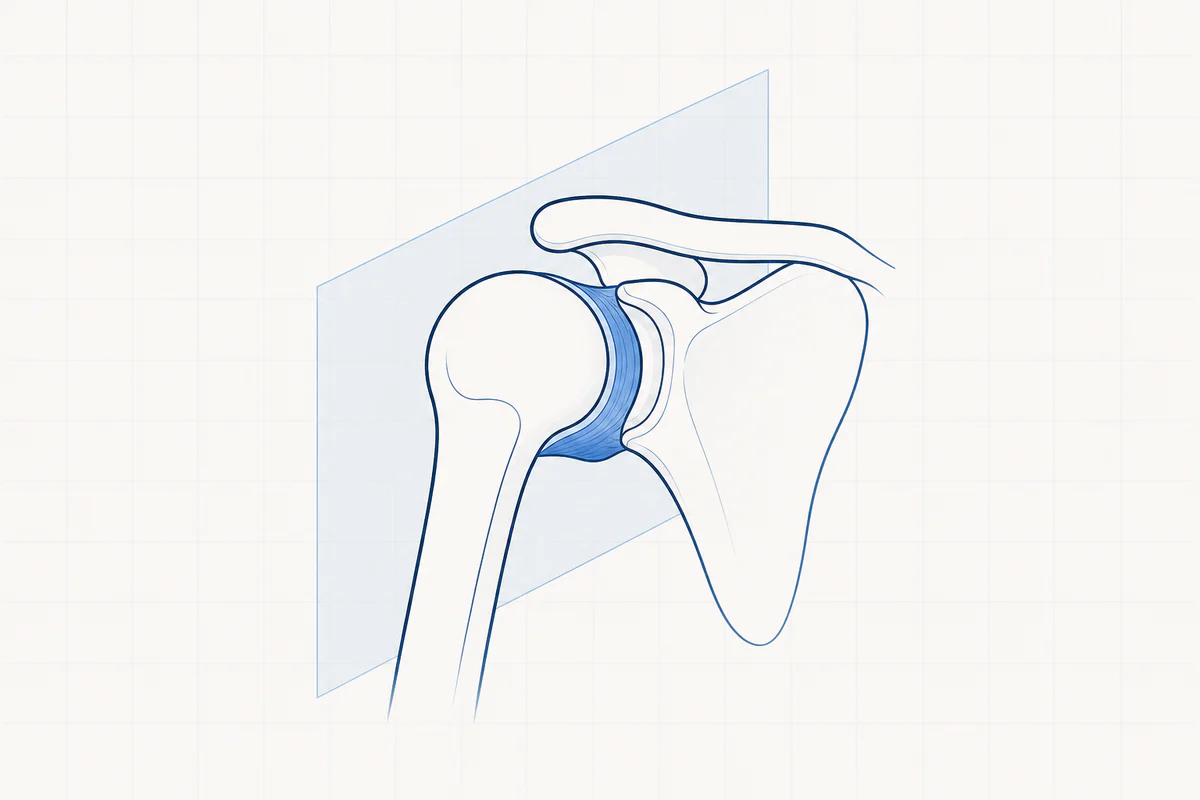
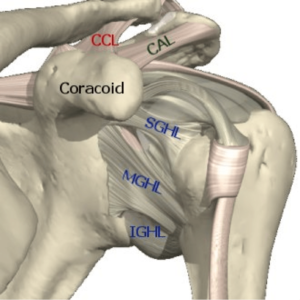
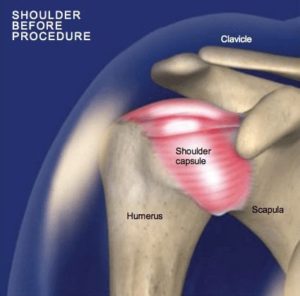
To guarantee the stability of the shoulder in normal circumstances, we have a sturdy membrane around the shoulder (capsule) containing strong reinforcing ligaments (ligaments).
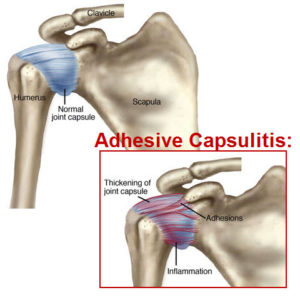
"Adhesive capsulitis" is the correct medical term, which describes that there is inflammation of this joint capsule and that there are thickenings within this capsule that cause the normal elasticity of this capsule to be lost. These thickenings, adhesions in the capsule, cause stiffness.
We distinguish 2 types of frozen shoulder.
- Primary adhesive capsulitis = idiopathic frozen shoulder
Gradually, pain and limitation of movement of the shoulder develop for no apparent reason. - Secondary adhesive capsulitis = acquired frozen shoulder
The pain and stiffness occurs for a known reason.
2. CAUSE
The exact cause of a primary frozen shoulder is therefore not known. We know that a huge inflammatory process develops in the shoulder capsule, but what triggers the inflammation is unknown. Some conditions make patients more susceptible to developing a frozen shoulder: diabetes mellitus, thyroid disease, Dupuytren's disease, Parkinson's disease, narrowing of the coronary artery of the heart, etc.
Diabetes patients have up to a 30% chance of developing a frozen shoulder at some point in their lives. There is "a theory" that glucose binds to collagen (building block of the shoulder capsule) when blood sugar levels are too high. This causes the shoulder capsule with the ligaments to become a bit sticky, which makes the shoulder stiff and painful.
The Secondary form always has a known cause, e.g. fracture of the shoulder, surgery on the shoulder, after a period of immobilization, ...
3. COMPLAINTS
Pijn vooraan de schouder, bovenop de schouder, volledig rond de schouder, die soms zeer hevig kan zijn en vaak ook de nachtrust verstoort. Geleidelijk aan toename van de bewegingsbeperking. Zowel de actieve beweeglijkheid (wat je zelf kan met de arm) als de passieve beweeglijkheid (als de arts uw arm beweegt) zijn verminderd. Het wordt steeds moeilijker om uw haar te kammen, uw BH vast te maken, uw autogordel te pakken, een bord uit een hoge kast te nemen, …
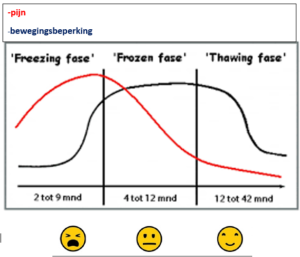
The complaints typically develop in 3 phases. Each phase can last several months.
- The freezing phase or inflammatory phase
In this phase, capsule inflammation occurs. This mainly causes a sharp increase in pain complaints. Pain is the dominant symptom and the stiffness begins to increase little by little. Symptoms in this phase are sometimes difficult to distinguish from symptoms of other shoulder conditions, such as impingement. - The frozen phase or stiffening phase
The shoulder becomes more and more stiff and it becomes more and more difficult to use the shoulder. The pain starts to decrease somewhat in this phase. - The thawing phase or recovery phase
In this phase, the pain continues to decrease and mobility continues to improve little by little. However, recovery of mobility is not complete for everyone!
4. EXAMINATIONS AND DIAGNOSIS
The most important examination is testing the mobility of the shoulder by your doctor. Both active mobility (what you can do yourself with the arm) and passive mobility (when the doctor moves your arm) are reduced. The strong restriction in exoroation is especially striking!
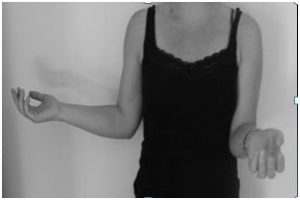
Additional technical examinations (radiography, ultrasound, arthro MRI scan) are of lesser value to confirm the diagnosis of a frozen shoulder. These examinations may be especially important to rule out other diagnoses or to better identify the cause of a secondary frozen shoulder.
5. TREATMENT
The treatment depends on the degree of inflammation and the degree of movement limitation. The vast majority of patients with frozen shoulder cannot be treated surgically.
NON-OPERATIVE TREATMENT
- Anti-inflammatory medications and pain-relieving medications.
- Two cortisone injections into the joint capsule can help to reduce (inflammatory) pain. It is very important that pain and inflammation reduce in preparation for the start of exercise therapy. Sometimes hyaluronic acid infiltrations can also be used.
- Physiotherapy can be started as soon as the pain allows it. The focus is on restoring mobility, eliminating the inflammation process and learning stretching exercises.
- It is very important that you practice every day!
Oefeningen die u thuis zelf kunt uitvoeren:
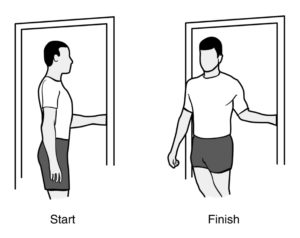
External rotation stretch. Stand in the doorway and bend your elbow to a right angle and hold the door frame. Keep your hand on the door frame and turn your body. You feel tension in the front of the shoulder. Try to hold this for 30 seconds and then repeat within the pain threshold.
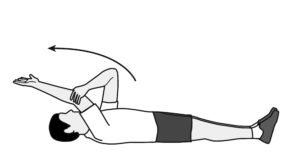
Forward flexion stretch. Lie down on your back. Use your healthy arm to raise your painful shoulder until you feel tension. Try to hold this for 15 seconds, relax and then repeat within the pain limit.
Crossover arm stretch Stand up straight and use your healthy arm to pull your affected arm over your chest just below your chin. Go to the pain threshold and try to hold this for 30 seconds, relax and then try to repeat.
OPERATIVE TREATMENT = arthroscopic arthrolysis
If mobility does not improve sufficiently in phase 2, keyhole surgery must be performed.
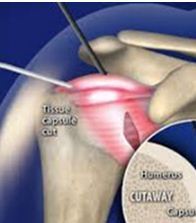
Through keyhole surgery, the thickened capsule of the shoulder is cleaved with a special instrument (radiofrequency probe).
After keyhole surgery, it is very important to start intensive physiotherapy as soon as possible and to perform exercises daily. Only through intensive exercise can the regained mobility through keyhole surgery be maintained.
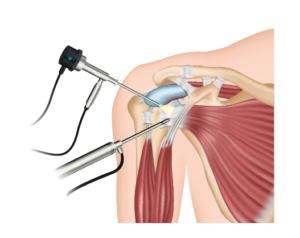
ANESTHESIA AND HOSPITAL STAY
The keyhole surgery is performed under a short general anesthesia in combination with a local anesthetic (interscalene block).
After the procedure you will stay in the hospital for 1 night.
6. COMPLICATIONS
- Overall the outcome is favorable, but it takes many months before a good result is achieved.
- Persistent stiffness of the shoulder despite exercise therapy.
- A frozen shoulder can develop again after healing (although rare), for example in dysregulated diabetes patients.
- Irritation of nerve pathways in the armpit with persistent pain afterwards.
- Infection, thrombophlebitis or damage to blood vessels or nerves are theoretical complications but in reality they are virtually non-existent.
7. REHABILITATION
The bandage in the initial phase is only for pain and should be worn as little as possible.
Zo veel mogelijk bewegen en intensief kinesitherapie volgen binnen pijngrens en volgens voorschrift. Er wordt geen beperking opgelegd! Het is evident dat krachtopbouw in de beginfase niet verstandig is. De focus ligt op herwinnen van de beweeglijkheid!
8. FACTS
- Try the pain controlled with prescribed painkillers and ice applications.
- Love the wounds clean and dry. Showering is permitted with a shower plaster (opsite, tegaderm, ..) The stitches can be removed after 14 days by the home nurse or your GP
- Disability. is between 3 weeks and 6 months and depends on the job content. Discuss this with your doctor before the procedure.
- Driving. You can start driving when you feel that you can easily steer with both hands without any problem. To do this, you should be able to comfortably raise your arm above shoulder level. For most people this is approximately 6 weeks after the procedure.
- Sports resumption. Walking and cycling are permitted within the pain threshold. Resumption of other sports is individually different and highly sport-specific. This can be discussed with your doctor.
Frequently asked questions

Orthopedisch chirurg – AZ Jan Palfijn Gent
Specialized in shoulder and knee surgery
The information on this page was prepared by Dr. Yves Depaepe and is intended as general medical information. Always consult your doctor for a personalized treatment plan.