DR. DEPAEPE
1. ANATOMY
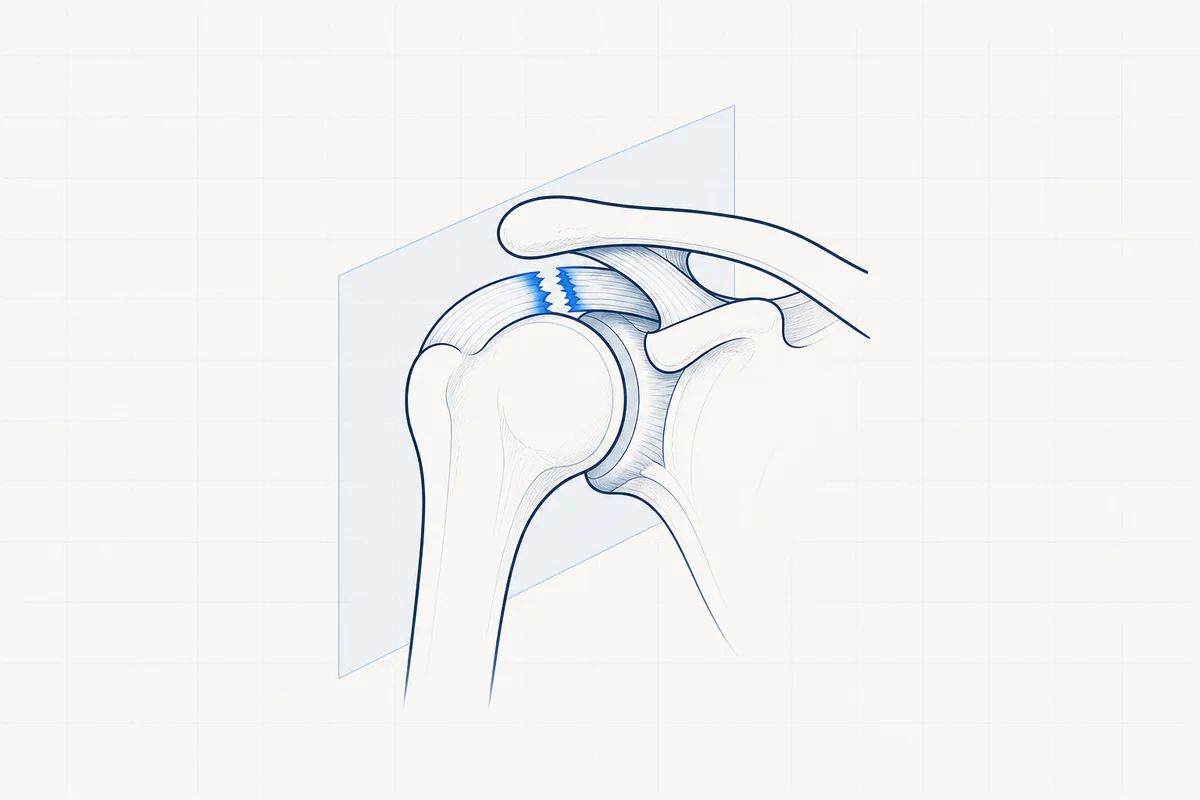
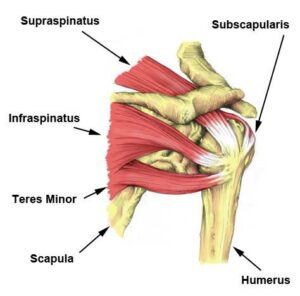
The rotator cuff is the most important muscle group of the shoulder. It is a tendon leaf consisting of 4 parts:
- Supraspinatus: raises the arm upwards
- Subscapularis: causes arm to rotate inward
- Infraspinatus and teres minor: mainly responsible for external rotation of the arm
These tendons also play an important role in the stability of the shoulder and "center" the ball in the socket of the shoulder.
These tendons connect the respective muscles to the bone of the upper arm (tuberculum majus).
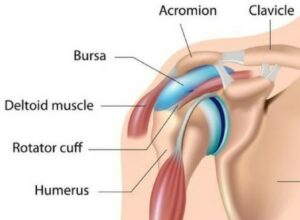
The tendons slide into the opening (subacromial space) between the ball of the shoulder and the roof of the shoulder (= acromion, extension of the shoulder blade forward). The bursa is located between this bony roof (acromion) and the tendons (rotator cuff). This bursa ensures better sliding of the tendons.
2. CAUSE
The tendons can tear due to trauma (accident, fall, violent pulling movement, etc.) or can tear due to a gradual degenerative process (long-term inflammation, wear and tear, etc.).
The supraspinatus has the smallest space to slide into and frequently rubs against the roof of the shoulder. This makes the tendon most susceptible to wear and tear.
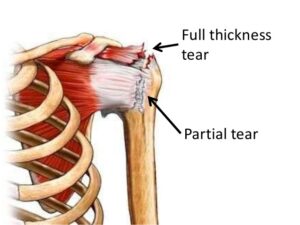
Tears in the shoulder tendon can be complete (full thickness, completely torn from bone) or can be partial (partial tear in the tendon).
The rotator cuff has a limited number of blood vessels. If there is a tear in the rotator cuff, no major bleeding will occur. This also means that no real healing process occurs. The attached muscle of the tendon also acts like an elastic band and pulls the tendon away from the place where it tore.
All this causes a shoulder tendon cannot heal or grow back on its own.
3. COMPLAINTS
The main complaints are pain and loss of strength.
The pain is usually localized in the upper arm.

Pain usually occurs when lifting above shoulder level, e.g. washing windows, placing a bag in a high cupboard, combing hair, etc.
Very often there is also pain at night when lying on the shoulder.
Complaints and discomfort can vary greatly from patient to patient.
4. DIAGNOSIS AND INVESTIGATIONS
The diagnosis is initially withheld or suspected upon clinical examination during consultation.
One standard radiography is always necessary.
One ultrasound can function as a screening test.
As soon as there is suspicion of a tear injury, it is best to undergo a contrast examination. (arthro CT, arthroscopy MRI).
This contrast examination will determine the decision regarding further treatment and will reveal the following factors: size of the tear, retraction of the tendon, freshness of the tear, atrophy or volume reduction of the muscle bellies.
5. TREATMENT
Depending on the age, bone quality, size of the tear, quality of the remaining tendon, atrophy of the muscle bellies, a non-operative treatment or surgical repair will be chosen.
1) Non-operative treatment:
The goal is to combat pain and inflammation and regain or preserve basic mobility.
This happens through taking painkillers and anti-inflammatories and by ice applications. In addition, injections ("infiltrations") can be administered. In case of severe pain and inflammation, preparations with corticoids. This is usually limited to 1 or 2 infiltrations. If the number of injections is limited, this will have only minimal side effects.
You can also choose hyaluronic acid infiltrations ("gel injections"). Hyaluronic acid is the main component of natural synovial fluid. This also has an anti-inflammatory effect and makes the joint fluid viscous so that smooth movement can be achieved again.
Physiotherapy will maintain mobility and also strengthen the unaffected muscles and tendons to optimize shoulder function as much as possible.
None of these treatments can heal the tendon or ensure that the tendon reattaches to the bone.
2) Surgical treatment:
What is a routine procedure for the shoulder surgeon is not a routine procedure for the patient.
The procedure is performed via keyhole surgery (arthroscopy).
You will receive a local anesthetic (pricks in the neck, interscalene block) and afterwards a light general anesthesia.
The tear is repaired using special bone anchors (2 to 5 per procedure).
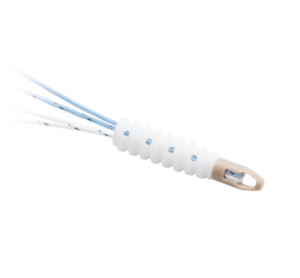
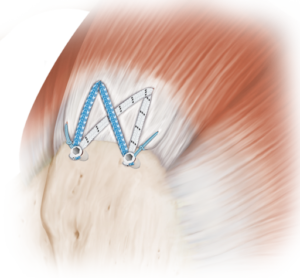
The torn shoulder tendon is thus reattached to the bone where it was torn.
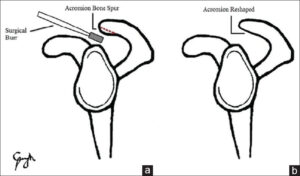
The space where the tendons slide into is also widened (roof = acromion is planed and straightened) so that the attached tendon can no longer pinch or rub against the roof of the shoulder.
If the tendon is not fully repairable, the maximum amount of tendon is repaired and additional debridement takes place (removal of the inflammatory tissue).
Because the biceps tendon is also affected in many rotator cuff tears, additional biceps tendon treatment is also performed during the same anesthesia if necessary.
6.COMPLACEMENTS AFTER PROCEDURE:
Major complications are not expected with such a procedure.
The main complications are:
- Stiffening of the shoulder (occurrence of frozen shoulder). As a preventive measure, everyone receives an adapted physiotherapy schedule. Exercises are also taught in the hospital that can be performed from the first day.
- Shoulder-hand syndrome: this is a combination of stiffening of the shoulder with pain radiating to the hand and wrist.
- Creation of a new crack. A tendon suture can never guarantee against re-tearing. If tendon quality is poorer, the risk of new tears is greater in the event of a new accident. Smokers also have a greater chance of the tendon tearing again.
- Infection: Every procedure has a risk of infection. Since the treatment is done via keyhole surgery, this risk is lower.
7. AFTERCARE REHABILITATION:
Since the tendon had to grow back to the bone, the arm is kept in a bandage for 4 to 6 weeks.
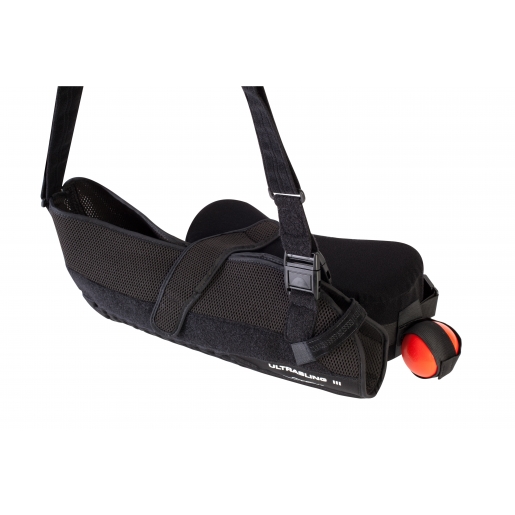
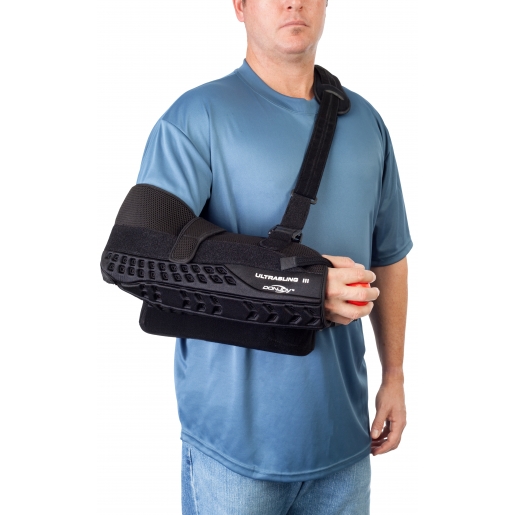
In the first 2 weeks after the procedure, there is a need for inspection and wound care of the small wounds. The stitches can be removed after 12 to 14 days.
It is also useful to apply ice to the shoulder daily and frequently.
Physiotherapy is started between weeks 1 and 4. The time depends on the type of tear, tension on the suture and quality of the tendon.
You will receive a prescription with a schedule from the treating surgeon.
Light exercises (pendulum exercises) are performed from day 1. These are learned during a hospital stay.
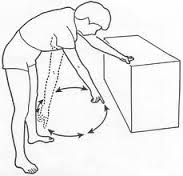
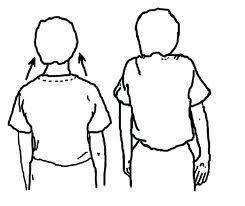
The first 6 weeks are mainly aimed at restoring passive mobility. The second period between 6 and 12 weeks is mainly aimed at restoring active mobility.
Strength exercises are only important once mobility has been sufficiently recovered.
The total rehabilitation varies greatly from person to person and depends greatly on the type of tear and tendon quality.
The total recovery time is between 3 and 6 months.
8. FACTS
- Try the pain controlled with prescribed painkillers and ice applications.
- Love the wounds clean and dry. Showering is permitted with a shower plaster (opsite, tegaderm, etc.). The stitches can be removed after 14 days by the home nurse or your GP.
- Disability is between 2 weeks and 6 months and depends on the content of the job. Discuss this with your doctor before the procedure.
- Driving. You can start driving when you feel that you can easily steer with both hands without any problem. To do this, you should be able to comfortably raise your arm above shoulder level. For most people this is about 5 to 6 weeks after the procedure.
- Sports resumption. Walking and cycling are allowed from 3 weeks when the initial pain and swelling have disappeared. Resumption of other sports is individually different and highly sport-specific. This can be discussed with your treating physician.
Frequently asked questions
Orthopedisch chirurg – AZ Jan Palfijn Gent
Specialized in shoulder and knee surgery
The information on this page was prepared by Dr. Yves Depaepe and is intended as general medical information. Always consult your doctor for a personalized treatment plan.